Care Instructions
Caring for Your Felted Pieces
Handmade felt is a beautiful and versatile textile, created with natural wool fibres and, in some pieces, silk and other materials. With a little care, your felted pieces will give you many years of enjoyment.
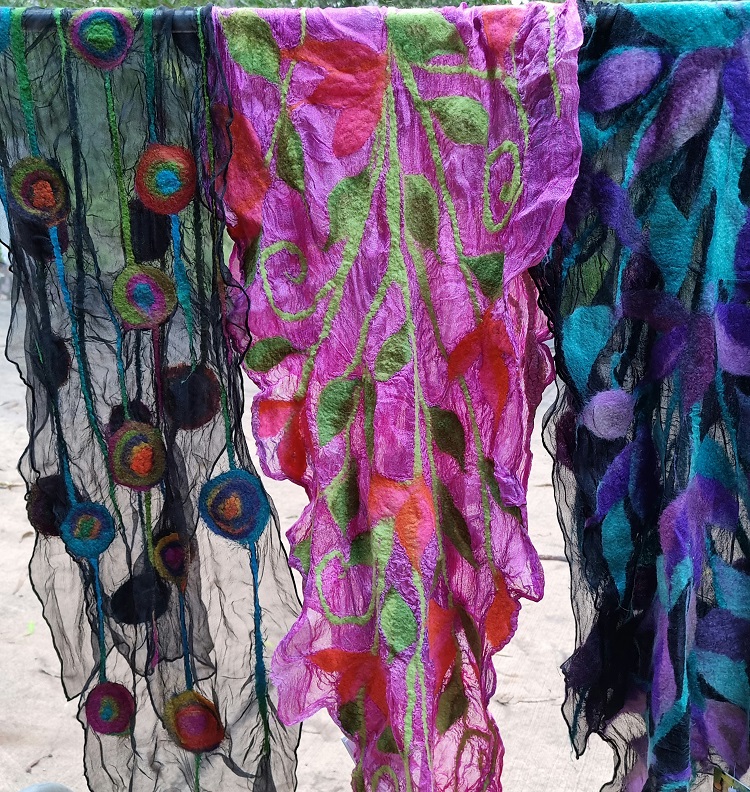
1. Wool and Silk Nuno-felted Scarves
Your scarf is a delicate combination of wool fibres and fine silk fabric. Treat it gently to preserve its texture, drape and shape.
Washing
- Hand wash in cool water using a small amount of gentle shampoo. Shampoo is a good choice because it is pH neutral.
- Alternatively, you can use Earth’s Choice dishwashing liquid, which is also pH neutral.
- Gently move the scarf through the water. Avoid rubbing, twisting or stretching the fabric.
- Rinse thoroughly in cool water.
- Gently squeeze out excess water. Do not wring.
Drying
- Roll the scarf in an old, clean towel and press gently to remove excess water (some dye run may occur)
- Reshape and lay flat or hang to dry, away from direct sunlight and heat.
- Steam iron on silk setting if needed. Do not tumble dry.
2. Felted Artwork – Unframed
Your felted artwork is best treated as a textile artwork rather than a washable fabric.
- Handle with clean, dry hands.
- Keep away from moisture, damp walls and direct sunlight, which may cause fading over time.
- To remove dust, gently brush with a very soft brush or use a low-suction vacuum with a protective screen held between the artwork and the nozzle.
- Avoid rubbing, pulling or brushing vigorously.
- Do not wash or immerse in water.
- When storing, lay flat or roll gently around a wide, clean tube, with the artwork protected by acid-free tissue or a clean cotton cloth. Avoid sharp folds and creases. Pop in the freezer for a week in a zip-lock bag or calico bag before long term storage.
3. Felted Vessels
Felted vessels are sculptural objects and are best kept dry.
- Keep away from prolonged exposure to moisture and direct sunlight.
- Remove dust with a soft brush or a gentle shake.
- If necessary, spot clean with a barely damp cloth, taking care not to saturate the felt.
- Do not soak, machine wash or tumble dry.
- If the vessel loses its shape, gently reshape it by hand and allow it to dry naturally. Holding over a steaming kettle can help before reshaping,this relaxes the fibres.
Protecting Your Felt from Clothes Moths
Wool is a natural fibre and can attract clothes moths. The moth larvae, rather than the adult moths, cause the damage by feeding on wool fibres. A little prevention can make a big difference.
Before seasonal storage:
- Make sure your felted pieces are clean and completely dry before putting them away.
- Place the item in a sealed zip-lock bag before freezing. Freeze for one week.
- Allow the item to return to room temperature while still sealed, before opening. This helps prevent condensation forming on the felt.
- For seasonal storage, use a sealed bag or airtight container. A fabric bag is lovely for everyday storage, but on its own it will not protect against moths.
- Store in a cool, dry place and check your pieces occasionally.
A final thought: Your felted pieces are handmade textile works. Gentle handling, clean storage and protection from moths will help preserve them for many years to come.